In the theme of religion, the Bible shows a development of the relationship between outer practices and laws and the inner one, the inner change, and true devotion. The Old Testament focuses on the sanctity of the covenant, on worship, and on the observance of laws as the principal support of the religious life. It is also shown that justice and compassion should follow the religious practice, or it would be useless. This theme is also reflected in the New Testament, which portrays religion based on belief and uprightness, as well as reflecting compassion for the needy people. True devotion has to do with less ritual and more about how well someone loves and serves.
The Old Testament offers a social and economic institution that had to regulate slavery. The texts impose restrictions on the term of service of a few individuals, particularly among fellow Israelites, and more enduring types of service on foreigners. The writings also came up with safeguards that were very uncharacteristic of their time, like instructions that the runaway slaves should not be compelled to be returned to their masters, but let them live a life as they wish. This control/protection shows not only a cultural acceptance of slavery, but an attempt at confining its worst impact.
| Genesis 37, Joseph being sold into slavery |
The Bible deals with the topics of slavery and religion as its reflected societies served as the foundations of connection on this matter. This content has given a combination of cultural acceptance, regulatory teaching, moral guidance, and values, which would go on and pose challenges to the principles of systems that were initially assumed to be right. Although there are also parts that seem to justify slavery, the rest act to demolish that and try to actually justify it. The parts show that there is a clash that exists between the truths of the old world and modern justice and compassion as they develop across the biblical chapters.
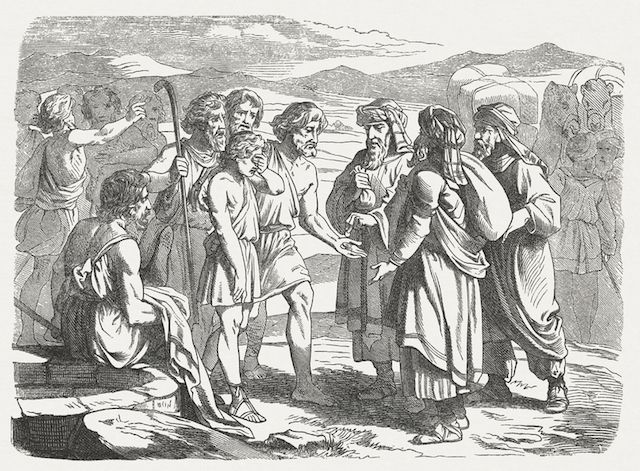 |
| An Illustration Showing Slavery in Ancient Times |
The New Testament is representative of the Roman Empire, where slavery was a common practice. The writers did not demand a specific ending of the institution, but rather provided moral prescriptions that weakened the association between masters and the slaves. Slaves were expected to fulfill their duties diligently, and their masters were encouraged to be tough and not cruel. In the same direction as these directions, however, there are indications of a loftier vision. Freedom is implied to be better when available, and the relationship between believers is redefined as family relationships, regardless of social status.
In the comparative analysis of how slavery is treated in the Bible, one may notice its acceptance and criticism. Its regulations, which presuppose slavery as one of its normal lives, find their acceptance. The criticism has grown in its limitations, its safeguards of the weak, and its larger conception of human equality before God. These aspects eventually inspired the later generations to counter by saying that slavery was not consistent with the other underlying principles of freedom and dignity within the tradition.We have been showing how the manifestation of a conflict between the reality of culture and the ideal of morality is witnessed in the Bible. It accepts slavery as a reality of early life, but puts elements that jeopardize its permanence. Simultaneously, religion is never constituted by ritual only but rather by implicit and sheer devotion, manifested by justice, compassion, and love.
https://www.catholic.com/magazine/print-edition/slavery-and-the-new-testament?
https://davidwilber.com/articles/making-sense-of-biblical-slavery?

No comments:
Post a Comment